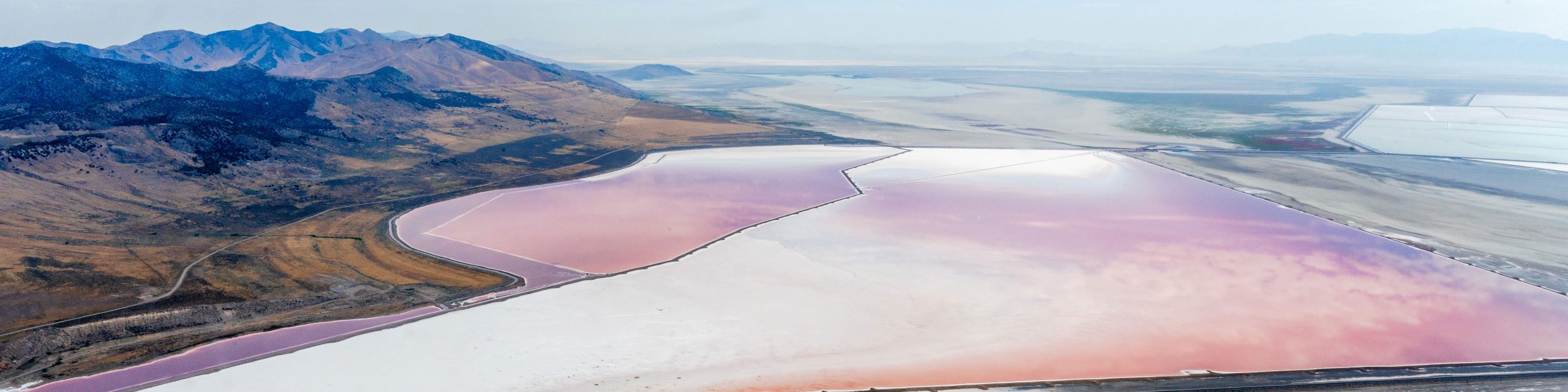
Great Salt Lake
Date: 08/20/2025
State: UT
Issues: Climate, Watersheds, Wildlife
Partner: Grow the Flow - Utah
Airport Origin : Ogden, UT
Mission
Engage elected officials, faith leaders, conservation NGOs, and stakeholders on the Great Salt Lake crisis.
As the largest saltwater lake in the Western hemisphere, the Great Salt Lake covered 3,300 square miles in the late 1980s, but now covers only 1,000 square miles. This decrease poses massive threats to the 2 million people living in the surrounding region, which is the most densely populated area in Utah. The lake contains toxic materials, and as it dries, dust, metals and chemicals like arsenic could become windblown, threatening air quality. The dwindling water level threatens the lake's 1.3 billion dollar economy in recreation, brine shrimp, and mineral extraction, including magnesium, of which 75% of the global supply comes from the Great Salt Lake. The water level reached its lowest in 2022.
This climate change induced disaster poses immediate threats to the communities that surround the Great Salt Lake, as well as the species that are supported by and reside in the lake. The algae, flies, and brine shrimp will die off, threatening the 10 million migratory birds that annually stop and feed at the lake.
Our partners are working to spread awareness about this pressing issue in hopes of a sustainable solution. The Jordan, Weber, and Bear Rivers provide water for crops and Wasatch Front communities before flowing into the Great Salt Lake. Increasing the water level in the Great Salt Lake will require innovations to balance agricultural and urban water needs, especially when excessive heat is requiring more water for crops and lawns. The solution to the Great Salt Lake crisis is complex, but it is clear, action is needed now.